home / art / travel / films / books
The World Press Institute: With the dollar dropping in value and fuel prizes rising, it has become more costly for Americans like me to rub shoulders from people from other parts of the world. We may be thankful, therefore, that the World Press Institute, which fell into eclipse last year due to lack of funds, was revived in 2008. A new and somewhat leaner program funded nine young journalists from newspapers and other media outlets around the world to spend two months touring the United States, visiting newsrooms, government agencies, cultural institutions and sporting events. The fellows also spent some time with their host families in Minnesota surveying the mid-American scene. Near the end of their visit, at an event held above the football field at Hamline University, these keen observers spent an evening discussing their impressions with anyone who cared to stop by to listen. It was certainly an interesting time to be in the United States, with the presidential campaign in full swing and daily crises on Wall Street. Yet when the fellows were given an opportunity to mention the aspect of American life that surprised them most, many chose to express some level of disappointment in American society more generally speaking. Among the surprises were that the US still has ghettos; that women do not have pay equity with men; that American journalists are far less cynical than their foreign counterparts (a good thing); that in many parts of the United States, liquor stores are closed on Sunday (which is not only a bad but a positively inexplicable thing); that a good deal of media coverage is devoted to the private lives of political candidates; that security measures in the United States are inordinately strict; that the United States, unlike China, is graced with a wide array an outstanding museums (a good thing); that Americans buy too much on credit--and now the entire world is paying the price ( a very bad thing).
This last point was stressed by Nidhi Sharma, a special correspondent reporting on national politics and government in New Delhi. She confessed with some pride that her husband still doesn't have a credit card, and chided Americans for running up purchases on the strength of assets that have proven to be less valuable than anyone thought—or on nothing at all. She observed that when the United States enters a period of recession, people take one vacation instead of two, but when India has a recession, millions starve. [It's interesting to note, however, that two-thirds of Freddy Mac and Fanny May mortgages are currently owned by foreigners. Why did they chose to invest here? I guess they were looking for safer investments and better rates of return. Did these investors really have the money, or were the investments heavily leveraged? It's all a little vague and confusing....] When asked about their impressions of the US health care system, Ermin Zatega, an investigative reporter working for the Center for Investigating Reporting in Sarajevo, described it as the finest health care that no one can afford, and Nidhi told the story of her sister in Dallas, who found that she could fly home to India to have her teeth fixed, and then fly back, for little more than the dental work alone would have cost her in the States. On the other hand, Tatiana Tavares, who edits the health supplement for the Brazilian newspaper Zero Hora , mentioned that the Brazilian health-care system was very affordable—but also excruciatingly slow, so that even a patient suspected of having cancer would typically have to wait five months or more before seeing a specialist or receiving the necessary tests. On another topic, Tatiana also observed that Americans, who have been voting for generations, seem to have developed a blasé attitude toward the privilege, whereas in Brazil, where they have only been voting for 14 years, election day is a big event, and everyone gets dressed up before going out to vote. Such civic enthusiasm is certainly a very good thing, but the image was tarnished slightly by her further comment, that a Brazilian, having voted, receives a card testifying to the fact, and would be very unlikely to be hired for any job unless he or she could produce that sign of civic involvement. At one point in the evening the fellows were asked to say a word or two about their own countries. Andras Petho, an editor and news reporter for the Hungarian news portal Origo , in Budapest, gave us a humorous glimpse at the inveterate pessimism of Hungarians by referring to its national anthem, which is full of groans and sighs and sorrow and grief along the following lines: ...Though in caves pursued he lie, Pity, God, the Magyar, then,
Andras knows of what he speaks. In a Eurobarometer survey taken in March, the Hungarians ranked as the most pessimistic in the European Union, and a recent article in the Economist observed: “Once the local wonder child, Hungary is limping, its government out-maneuvered by the opposition, its economy sclerotic and its population resentful.”] Gabriela Manuli, an investigative reporter for Perfil, a newspaper in Buenos Aires, described Argentina as a wonderful country, which ought to be the glory of South America, though it somehow has never quite fulfilled its promise. (I had the opportunity after the panel discussion to ask her why, and she said, “Corruption. The youth don't care about politics and the same class of people is always in office.”) Antoinette Lazarus, a political reporter, online producer and presenter for the South African Broadcast Corporation in Johannesburg, compared her nation's role in Africa to the one the US sometimes plays on the world stage—that is, of a beacon. But she reminded us that South Africa's president, Thabo Mbeki, had just resigned, along with the finance minister and ten members of the cabinet. Trouble lies ahead. She described Capetown as beautiful and cheap, though she admitted that crime had become a major problem, and that many people were leaving the country. Ermin Zatega, a self-proclaimed “blue-eyed non-practicing Muslim” from Bosnia, reminded us that his small nation was the host to the 1984 Winter Olympics, and at an earlier time, was host to the start of the First World War. He pointed to his Hungarian friend Andras down the way, and said something on the order of “We shot your arch-duke.” They both laughed. Evidently time heals all wounds, and I suppose that nowadays Hungary probably doesn't identify too strongly with Austria anyway. Among the things about America that surprised, and pleased, Ermin was the fact that one of its senators (our own Keith Ellison) had been sworn in on a copy of the Koran, and that George W. Bush, of all people, had instigated a tradition of holding a dinner at the White House in honor of a Muslim feast (the name of which I did not catch). Vykintas Pugaciauskas, international news editor and anchor for Lithuanian television, spoke of the
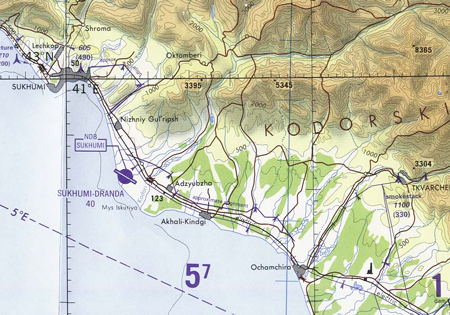
vaunted history of his now rather small country (at one time it was the largest in Europe) which will be celebrating its 1,000th birthday in 2009. Yes, beautiful (like Minnesota) but troubled (unlike Minnesota) by a border with a hostile neighbor. But Lithuania renewed its independence in 1990, and was making great strides economically even before joining the EU. It has sent troops to the conflict in Afghanistan and in return its citizens have finally received the privilege that the citizenry of many other EU nations enjoy, of being able to travel to the US without securing a visa beforehand. I had the opportunity to talk with Vyc before the panel discussion took place, and he filled me in on some of the details of the Russian invasion of Georgia. he happened to be in Georgia when the shooting broke out. Everyone in eastern Europe had been aware since March, he said, that war was imminent. The Georgians had staged maneuvers, the Russians had staged maneuvers. The Georgians had been warned by the Poles and the Ukrainians that the Russians would do anything they could to irk them, attempting to draw them out, and naturally, they had been counseled to resist the temptation. Also quite naturally, Georgian president Mikheil Saakashvili had eventually risen to the bait. I asked him for his reactions. “Well, I've never been in a war zone before,” he said, “but I've covered many wars, and the scenario was familiar. It was bloody. Then there was a hospital. And then they attach a piece of paper to a tree outside the hospital listing the causalities.” But I was less interested in a blow-by-blow of the situation on the ground than in getting his views on the causes and consequences of the war. I quoted the headline from the Economist the week after the invasion: “The Georgians Started the War, But it Went According to a Russian Script.” Vyc had a different view: “It Went According to a Russian script,” he said, “and the Russians a lso started it.” He referred to the peace plan brokered by the French president Sarkozy with ill-concealed contempt. “The Old Europe can do nothing, “ he told me. “The Sarkozy plan was all about France grabbing the limelight. The U.S. State Department knew nothing about it, and when they found out that the agreement didn't say a word about the territorial integrity of Georgia, they were outraged. Condoleezza Rice flew over and insisted that they rewrite the whole thing. And they did.” “But there are those,” I countered lamely, “including our own native son Thomas Friedman, who argue that the United States was too aggressive in promoting NATO expansion following the collapse of the USSR. Thus Russia ended up feeling that everyone was against them.” “That argument is just another form of appeasement,” he replied. “Lithuania wanted to join NATO. We were very eager to join. You cannot imagine what it means to hear those lines (and here he quoted from the NATO bylaws, citing chapter and verse) that an attack against Lithuania would be considered an attack against the United States. You cannot imagine how good that sounds to a nation that has been under the thumb of a totalitarian regime for half a century.” “But are there not quite a few ethnic Russians in Lithuania, just as there are in South Ossetia?” I asked. (It's actually around 5 percent.) “In Lituania we don't have much of a problem with ehnic Russians. They are a small minority and are well integrated into the population. But," he went on, "In Latvia and Estonia things are different. The Russians there complain of being marginalized, but the fact is, they have never learned the local languages. All these two nations require to become a citizen is what you in the United States require—to learn the language and pass a citizen test. But they never learn the language!” Vyc went on the explain in some detail the special problems associated with the fact that following the collapse of the USSR, the Russian port of Kaliningrad (formerly the Prussian city of Königsberg) became an exclave entirely cut off from the rest of Russia. Kaliningrad is the home of the Russian Baltic fleet and the most heavily militarized area of the Russian Federation. Yet to reach it from Russia proper you must pass through the entire length of Lithuania. It is a great privilege to discuss such matters with an expert, and Vykintas certainly was one. During the panel discussion itself, on the other hand, the fellows devoted perhaps too much time to delivering fairly basic remarks about their countries. For example, I would guess that most people in the audience already knew that Spain is a collection of distinct provinces—Catalonia, Galician, etc; that India is a complex and diverse society with a caste system, and cannot be reduced to a snapshot of its infamous slums. I would like to have learned about how Brazil is dealing with its rainforests, how Bosnians are getting on ten years after their ugly war, what Nidhi thinks of the nuclear deals being cut between India and the Unites States, and how her country is reacting to the changes going on in Pakistan. All the same, to be in the same room with such a gathering of young journalists was a treat. In their two month visit, these reporters and editors had learned a lot about the United States—though it seemed to me that they had also developed a few misconceptions along the way. What is indisputable is that the fascinating tango of attraction and repulsion between America and the rest of the world is still going strong. And that the World Press Institute continues to play a part in keeping the dance floor hopping. |
|---|